TransMedMat is an interdisciplinary research initiative at RWTH Aachen University dedicated to the development of next-generation medical materials.
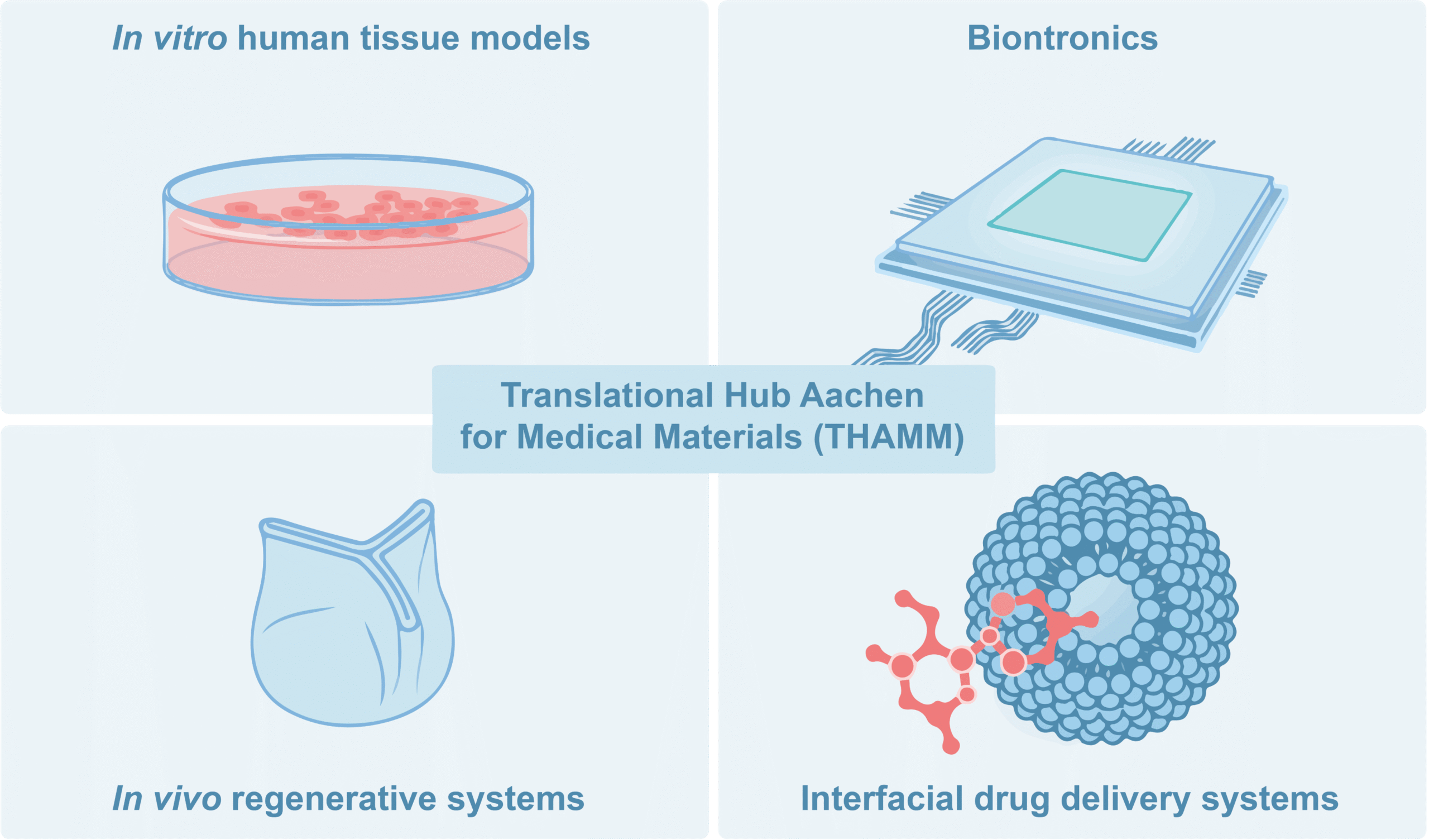
The project is structured around four synergistic focus areas (FoAs):
FoA1 – In vitro human tissue models: Development of advanced human tissue models that replicate key physiological and pathological features to improve drug discovery, disease modeling, and predictive testing platforms.
FoA2 – Biontronics: Creation of biontronic systems that seamlessly interface biological tissues with electronic components, enabling bidirectional communication for applications such as neuromodulation, tissue stimulation, and responsive feedback control.
FoA3 – In vivo regenerative implants: Engineering of regenerative implants including vascular grafts, heart valves, and spinal cord scaffolds that integrate with host tissues, support regeneration, and restore organ and system functionality.
FoA4 – Interfacial drug delivery systems: Design of next-generation drug delivery systems capable of targeted, controlled release across biological barriers, including stimuli-responsive formulations and systems for precision gene and cell modulation.
TransMedMat aims to design smart biomaterials that can sense and respond to their environment, develop bioengineered systems for tissue culture and regeneration, and integrate computational modeling to simulate tissue-material interactions. The project combines materials science, biotechnology, electronics, and regulatory science to create medical systems that deliver drugs precisely, stimulate tissue regeneration, and interface seamlessly with biological systems.
These efforts include the development of new production technologies to enable scalability, reproducibility, and clinical readiness. Focus areas work together to validate materials in vitro before moving to in vivo applications, ensuring safety, efficacy, and minimal reliance on animal models.
At the core of TransMedMat is the Translational Hub Aachen for Medical Materials (THAMM), which ensures that scientific advances are aligned with ethical, societal, and regulatory standards. THAMM provides support through tailored workshops, stakeholder engagement, and integrated ethical assessments across all focus areas.